

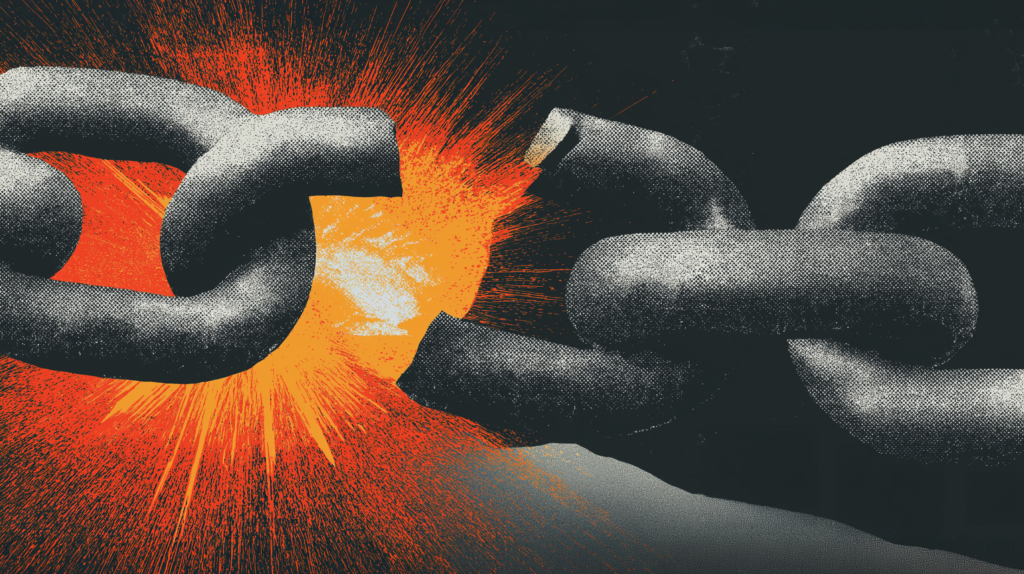
I was twenty-two, standing in a grocery store in Cleveland, doing math in my head.
Not “can I afford this” math. The other kind. The how much deeper in the hole does this put me kind. Adding up prices as I moved down the aisle, putting things back when the total climbed too high.
And somewhere between the bread and the checkout line, an image hit me so hard I almost stopped walking: my dad, hunched over the kitchen table with a notepad, struggling to balance the family budget week after week.
I had moved four hours away from that house. New city, new job, new life. And I was standing in a grocery store running his exact play.
That’s the thing nobody tells you about generational cycles. You don’t inherit them like a diagnosis, in one dramatic moment. You inherit them like a walk — something you picked up so young you don’t even know you’re doing it. And you can put four hundred miles between yourself and the house you grew up in and still be living inside it.
If you’ve ever caught yourself mid-sentence sounding exactly like a parent you swore you’d never become, this post is for you. I’m going to tell you what breaking a generational cycle actually takes — not from a textbook, but from thirty years of doing it, badly and then better.
What a Generational Cycle Actually Is
When people hear “generational cycle,” they usually picture the extreme stuff. Addiction. Abuse. The things that make headlines.
Sometimes it is that. But most cycles are quieter, and that’s exactly what makes them dangerous. They look like:
Money panic. Debt as a lifestyle. Doing math in your head at the grocery store because that’s what your father did.
Silence. Pretending things are normal when everyone in the house knows they aren’t.
Temper. Avoidance. Working yourself into the ground. Drinking to quiet something that won’t stay quiet.
I grew up in a modest saltbox house — just under 2,000 square feet trying to contain five lives. From the street, it looked immaculate. My dad kept the landscaping perfect: every hedge trimmed, every mulch bed edged. My parents took pride in what they had, and honestly, that taught me something good.
But inside, my parents’ marriage was slowly collapsing. My father fought a neurological shaking disorder with boxes of wine. And we all pretended things were normal. That was the real inheritance on offer — not the temper or the drinking specifically, but the pretending. A family carrying secrets we didn’t have names for.
I built myself a bedroom in the basement. Wood beams, warm tones, my own bathroom — the only bedroom in the house that had one. I spent months getting it right. Looking back, I know exactly what I was doing: while everything upstairs fell apart, I was building one space I could control.
That instinct — build something better than what you were handed — turned out to be the way out. But it took me years to understand that, and I broke plenty of things along the way.
Why Awareness Isn’t Enough (and Neither Is Willpower)
Here’s where most advice on breaking generational patterns falls apart. It stops at awareness. Journal about your childhood, understand where the pattern came from, and the insight will set you free.
It won’t. I knew exactly where my patterns came from. Knowing changed nothing about what I did under pressure.
The other camp says willpower. Just decide to be different. Grit your teeth.
That fails too, and I can prove it, because I tried it in the worst possible way.
When I discovered my father had been living a double life, I decided I was going to be the guy who told the truth — the opposite of a family that pretended. So I told the truth. With a flamethrower. The letter I wrote my father went nuclear, and our relationship went with it.
Years after my parents’ divorce, my dad told me that letter forced him to confront things he’d been running from. So it wasn’t worthless. But I caused unnecessary damage to a man who already carried significant shame — because I chose cruelty when honesty would have done the job. I wasn’t breaking the family pattern of silence. I was just swinging to its opposite extreme, which is its own kind of being controlled by it.
That’s the trap: reacting against a cycle is still letting the cycle drive. Awareness without action changes nothing, and raw willpower without a method usually just creates a new mess.
You need both — plus a decision you’re willing to make more than once.
How to Break a Generational Cycle
Strip away everything I’ve learned the hard way and four moves are left. None of them are complicated. All of them are hard.
1. Name it — out loud, specifically. Not “my family has issues.” Name the actual pattern: We don’t talk about hard things. We spend money we don’t have. We drink when it gets loud inside. A cycle you won’t name is a cycle you can’t fight. Naming it felt disloyal the first time I did it. Do it anyway. You’re not betraying your family by telling the truth about a pattern — the pattern was the betrayal.
2. Interrupt it — at the moment it fires, not after. Cycles live in small, automatic moments. The urge to go quiet when a hard conversation starts. The reach for the thing that numbs. The grocery-store math spiral. The interruption doesn’t have to be graceful; mine rarely were. It just has to break the automatic part. Even a pause — I know what this is, and I’m not doing it on autopilot — is a crack in something that’s been running unchallenged for generations.
3. Replace it — because you can’t beat a pattern with nothing. This is where my nuclear letter failed. I interrupted the silence but had nothing to replace it with except rage. The replacement for silence isn’t cruelty; it’s honesty with the temperature turned down. The replacement for money panic isn’t pretending money doesn’t matter; it’s a budget you actually run. Whatever the old pattern gave your family — protection, relief, control — the new one has to provide it a better way, or you’ll drift back.
4. Repeat it until it’s boring. This is the step everyone skips. Breaking a cycle isn’t one dramatic decision. It’s the same unglamorous decision made hundreds of times, until the new way stops feeling like a performance and starts feeling like you. There’s no finish line where someone hands you a certificate. You just notice, one day, that the old pattern feels foreign.
The Cost Nobody Warns You About
I’m not going to sell you the highlight reel. Being the first person in your family to do things differently is lonely in a way that’s hard to explain to anyone who hasn’t done it.
You become a mirror people didn’t ask for. When you stop pretending, you make it harder for everyone else to keep pretending — and some of them will resent you for it. You’ll question yourself constantly, because you have no model. Everyone else is following a trail. You’re cutting one.
Some relationships will strain. Mine did. There were years where the distance between my father and me felt like the price of the whole project.
Here’s what I’d tell you about that price: it’s real, and it’s still cheaper than the alternative. The cycle collects payment too — it just spreads it across your whole life and sends the biggest bill to your kids.
How You Know It’s Working
For years, I had no proof any of it was working. Then I got proof I never expected.
My father was in hospice care in Cincinnati, days from dying. Dementia had taken most of his ability to communicate. The trip down felt heavy — I knew it would likely be one of my last visits with him.
My son Noah was twelve. He knew my father and I had never been close — I’d been honest with him about that, and about how much I cherished what he and I had instead. The day before I left, Noah came to me and said, “Dad, I’m coming with you. I don’t want you to have to do this alone.”
He was twelve. He could have spent the weekend with his friends and no one would have questioned it. Instead he chose to walk into a hospice room because his dad needed him. He stayed close the whole time, occasionally whispering, “Are you okay?” I sat at my father’s bedside grieving the relationship I never had with him, while my son quietly demonstrated the one we’d built.
You break generational cycles not just by being different, but by raising children who carry those better patterns forward. Noah couldn’t save my relationship with my father. But he showed me the cycle was actually broken — not because I’d willed myself to be different, but because the different way had taken root in someone else.
Kids don’t listen to lectures. They imitate patterns. They don’t become what you tell them to be — they become what you show them is acceptable.
So the question isn’t whether you’re passing something down. You are. Everyone is. The only question is what.
The Cycle Ends With You — Decide It, Then Prove It
Somewhere right now, someone is sitting in the dark convinced that breaking the cycle is something that happens to other people. Better people. People with more advantages, more resources, more luck.
I’ve watched election-year outrage, self-help trends, and family drama come and go, and the pattern underneath never changes. Different families, different details. Same cycle. Until someone decides otherwise.
“The cycle ends with you” isn’t a slogan to put on a wall. It’s an identity you claim before you’ve earned it and then spend years earning. You won’t do it perfectly. I sure didn’t — ask my father’s letter. But perfect was never the assignment. Going first was.
Name it. Interrupt it. Replace it. Repeat it until it’s boring.
Twenty years from now, somebody who’s still trapped in their version of the pattern is going to look at your life and realize a way through exists. That’s the whole job.
Your move is next. Make it count.
I wrote a book about this. Brave & Boundless: 15 Rules for Breaking the Cycle and Building What’s Next is the full playbook — the stories above are pieces of it.
A note on what this is: I’m not a therapist, and this isn’t medical or psychological advice — it’s my story and what I’ve learned living it. If your family’s patterns involve trauma, addiction, or abuse, working with a licensed professional isn’t a detour from breaking the cycle; it’s often the fastest way through it. If you’re in crisis in the US, you can call or text 988 anytime.